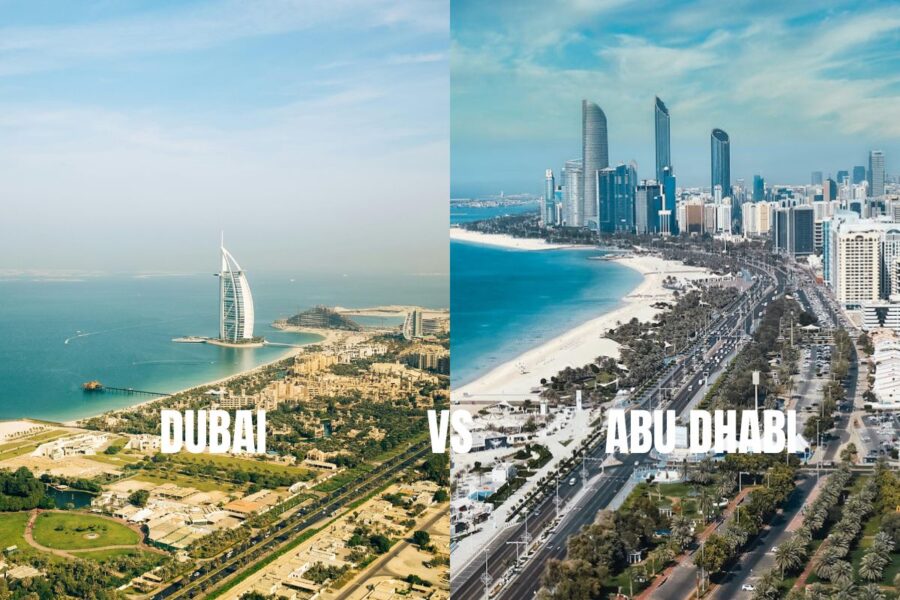

When founders choose where to launch their business in the UAE, the decision usually comes down to Abu Dhabi vs Dubai. Both cities offer world-class opportunities, global reach, and powerful startup ecosystems. However, one factor drives long-term profitability more than anything else: tax benefits.
Understanding how each emirate handles tax rules helps founders build smarter structures from day one. It is not just about saving money. It is about setting up your company in a place where it can scale quickly without compliance barriers or surprise costs.
The UAE Tax System Explained
Before comparing tax benefits, it helps to understand the bigger national picture.
Historically, the UAE had no personal income tax and no corporate tax. In 2023, a federal corporate tax of 9 percent was introduced for business profits above AED 375,000. This applies everywhere, including Dubai and Abu Dhabi.
However, the UAE kept its free zone model, which allows companies to qualify as a 0 percent corporate tax entity if they meet the “free zone person” criteria. Because Dubai and Abu Dhabi structure their free zones differently, founders often compare them to find the best tax benefits.
Tax Benefits in Dubai
Dubai positions itself as the business capital of the region, and its tax structure is built for speed and global expansion.
Large Network of Tax-Free Free Zones
Dubai offers more than 30 free zones such as:
- DMCC: Ideal for trade, crypto, and commodities.
- Dubai Internet City: Designed for software, IT, and SaaS founders.
- Dubai Silicon Oasis: Great for tech, AI, and engineering companies.
These zones provide major tax benefits including:
0 percent corporate tax on qualifying income, 100 percent foreign ownership, and no import or export duties.
Faster VAT Refund Mechanisms
Dubai is efficient in VAT refunds for exporters, ecommerce companies, and B2B operations. This frees up cash flow for early-stage founders.
Business Setup With Residency Benefits
Many Dubai free zones provide tax-free business setups bundled with residency visas, making relocation smooth and cost-efficient for founders.
No Personal Income Tax
Although this is nationwide, Dubai’s streamlined banking and digital infrastructure make it easier for founders to manage finances efficiently while enjoying tax-free salaries.
Dubai is the top choice for founders who want global visibility, speed, and flexible tax benefits.
Tax Benefits in Abu Dhabi
Abu Dhabi takes a more institutional and incentive-driven approach to tax benefits, especially for high-impact industries.
Specialized Free Zones With 0 Percent Corporate Tax
Abu Dhabi focuses on strategic sectors:
- ADGM (Abu Dhabi Global Market) for fintech, finance, and regulated businesses.
- twofour54 for media, production, and gaming.
These zones offer 0 percent corporate tax on qualifying income, 100 percent foreign ownership, and no currency restrictions.
Government Grants and Subsidies
Abu Dhabi provides startup-friendly incentives through programs like Ghadan 21, which reduce operating costs and support innovation.
Access to Sovereign Wealth Funding
Major investment institutions such as Mubadala and ADQ often invest in companies headquartered in Abu Dhabi.
Lower Operational Costs
Office space and rentals tend to be more cost-effective compared to Dubai, giving founders additional savings beyond tax benefits.
Abu Dhabi is ideal for founders who want long-term tax efficiency paired with government support and access to capital.
Which Emirate Offers Better Tax Benefits
If you prioritize speed, market reach, and free-zone flexibility, Dubai gives you the widest tax-benefit options.
If you prefer government incentives, lower overheads, and access to sovereign investors, Abu Dhabi may deliver more financial value over time.
Both cities offer 0 percent personal income tax and the possibility of 0 percent corporate tax through free zone qualification. The best option depends on your business model, industry, and expansion goals.
Final Thoughts
Choosing between Abu Dhabi and Dubai is not a question of which city takes less. It is a question of which city gives more. Dubai offers unmatched access and flexibility for fast-growing startups. Abu Dhabi provides stability, incentives, and capital support. Both offer some of the strongest tax benefits in the world.
Most founders evaluate their long-term strategy, funding plans, and industry alignment before choosing their launch city. Many also work with experienced advisors like FounderX to structure their company for maximum tax benefits and full compliance from day one.